Tractive Dog GPS Tracker Review: Worth It? (November 2026)
The Tractive GPS tracker suits dogs over 8 lb whose owners want frequent live location updates, escape alerts and health monitoring. Choose the standard collar attachment for everyday tracking or consider the XL for a larger dog and longer charge intervals.
On this page (10 sections)
- What does the Tractive GPS tracker do?
- How should you choose between Tractive and Tractive XL?
- When should you choose Fi instead of Tractive?
- Who benefits most from Life360 Pet GPS?
- What should you check about coverage and subscriptions?
- How do you set up a tracker before relying on it?
- How useful are Tractive's health and bark alerts?
- How should you care for and use the tracker?
- Which mistakes make a dog GPS tracker less useful?
- Which Tractive GPS tracker should you choose?
The Tractive GPS tracker is a useful choice for dogs over 8 lb when you want live location updates, escape alerts and health monitoring in a collar attachment. Choose it to help find a wandering dog and notice changes in daily patterns.
Its virtual fence sends a notification when your dog leaves a boundary. Keep using a leash, secure fence and supervision, because the tracker cannot stop an escape.
What does the Tractive GPS tracker do?
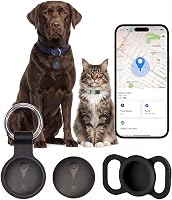
Tractive combines live location, escape alerts, location history and health monitoring in one device. Tractive says live location updates arrive every 2–3 seconds, which suits owners who want to follow movement closely during a search.
Tractive Dog GPS Tracker: Best for everyday escape alerts

- Live location updates every 2–3 seconds
- Virtual fences and location history
- Heart and respiratory rate monitoring
- Waterproof collar attachment
A collar attachment for owners who want to follow a dog's movement and receive escape, health and behavior alerts. It suits dogs over 8 lb.
Pros
- Frequent live location updates
- Custom virtual fences and location history
- Heart, respiratory rate and bark monitoring
- Waterproof design with LED and sound
Cons
- Not intended for dogs weighing 8 lb or less
- Maximum battery estimate is not a charging schedule
- Virtual fences send alerts without containing the dog
You can draw virtual boundaries around familiar places and review where your dog has traveled. Those features serve different jobs: the boundary draws your attention to an escape, while the map and history help you work out where to look.
The standard tracker weighs 1.3 oz and measures 2.8 x 1.14 x 0.67 inches. Its waterproof design, LED and sound feature support everyday outdoor use and can help you locate the device once you're nearby.
Who should buy the Tractive GPS tracker?
Buy the standard model if your dog meets its size guidance, you want to keep using a separate collar, and location tracking is your main goal. It makes particular sense for owners concerned about open gates, unfamiliar surroundings or a dog slipping away during a walk.
The collar attachment format lets you assess the tracker and collar fit separately. Check that the device sits securely without crowding the buckle, rubbing the neck or interfering with leash attachment.
Skip it if your dog weighs 8 lb or less, or if you mainly want a system that teaches and enforces a boundary. Compare GPS dog fences and wireless dog fences if containment is the job you need to solve.
How should you choose between Tractive and Tractive XL?
Choose fit first, then charging needs. The standard Tractive suits dogs over 8 lb and has a stated battery life of up to 14 days; the XL is intended for dogs over 44 lb and offers up to 6 weeks.
Tractive XL GPS tracker: Best for large dog households

- For dogs over 44 lb
- Up to 6 weeks of battery life
- Live location updates every 2–3 seconds
- Heart rate and bark monitoring
The XL suits larger dogs whose owners want longer charge intervals while keeping live tracking and health alerts.
Pros
- Longer stated battery life than the standard model
- Live tracking and location history
- Heart and respiratory rate monitoring
- Subscription covers the built-in SIM and data
Cons
- Subscription required
- Not intended for dogs weighing 44 lb or less
- Cellular coverage matters for connected tracking
The XL keeps the frequent live updates and monitoring features that make the standard tracker useful. Its longer battery estimate is the main reason to consider it for an eligible larger dog.
It uses cellular connectivity and requires a subscription covering its built-in SIM and data. Include the plan commitment in your decision before choosing the hardware.
For a dog that meets both size thresholds, think about your routine. The standard model deserves consideration if its attachment fits well and regular charging is manageable; choose the XL if fewer charging interruptions matter more.
Skip the XL for a smaller dog, even if the longer battery estimate sounds appealing. A device your dog can wear comfortably is more useful than extra capacity in an unsuitable attachment.
Neither maximum battery figure should become an automatic charging schedule. Watch how quickly the charge falls during your own routine before deciding how often to recharge.
When should you choose Fi instead of Tractive?
Choose Fi Series 3+ if you prefer a complete GPS collar and longer potential charge intervals. Fi states up to 3 months per charge, with actual battery life affected by settings, signal and activity.
Fi Series 3+ GPS collar (blue): Best for infrequent charging

- GPS and LTE-M tracking
- Up to 3 months per charge
- Safe Zones and Escape Alerts
- Included Fi Base charger
Choose Fi if you prefer a complete GPS collar and longer potential charge intervals. This blue version is size large and requires Fi Membership.
Pros
- Long stated battery life
- Included charging base
- Shared household access in the app
- IP68/66K waterproof rating and built-in LED
Cons
- Fi Membership required
- Battery life depends on settings, signal and activity
- This specific collar is size large
Fi uses GPS and LTE-M tracking, and Lost Mode switches to rapid live updates. Its Safe Zones send Escape Alerts, while the app tracks activity, sleep and behaviors such as barking, licking and scratching.
The included Fi Base gives the collar a dedicated charging place. Shared household access also helps when more than one person needs to check the dog's location or daily activity.
This particular blue collar is size large, so measure your dog's neck before choosing it. Other sizes exist in the range, but that does not make this version suitable for every dog.
Skip this Fi option if you want to retain a separate collar attachment or the large size does not fit. Fi Membership is required for location tracking, alerts and health features, so the collar alone is not the full commitment.
Our Tractive vs Fi comparison helps you weigh the attachment format, charging routine and monitoring features side by side.
Who benefits most from Life360 Pet GPS?
Life360 best suits households sharing daily pet care, especially when reminders matter as much as location checks. Its app brings feeding, walking and medication reminders together with activity reports and Escape Alerts.
Life360 Pet GPS Tracker: Best for shared pet care

- GPS, LTE and Bluetooth tracking
- Virtual fences and Escape Alerts
- Shared care reminders and activity reports
- 12 months of Silver included for eligible members
Life360 suits households that want location alerts and a shared place for feeding, walking and medication reminders. Device use requires a subscription and cellular coverage.
Pros
- Shared household routines and reminders
- Activity and distance reports
- Escape Alerts and community recovery support
- IP68 water resistance
Cons
- Requires cellular coverage
- Included subscription applies to new and free members
- Subscription auto-renews after the included period
Its GPS, LTE and Bluetooth tracking requires cellular coverage. Life360 also includes community recovery support through its Pet Finder Network, which adds another route for seeking help if a dog goes missing.
New and free members receive 12 months of Silver, and the subscription auto-renews afterward. Check eligibility and the renewal terms rather than assuming the included period applies to every existing account.
Life360 states up to 14 days of primary battery life. Its separate Reserve Mode extends findability after the main battery runs down, but that reserve period should not be treated as months of normal live tracking.
Choose it when several people need a shared record of walks and care tasks. Skip it if those tools add little to your routine and your main interest is Tractive's heart and respiratory rate monitoring.
What should you check about coverage and subscriptions?
Check coverage where your dog actually goes, along with the plan needed to use the tracker. A long tracking range does not remove the need for a working connection between a connected tracker and your phone.
GPS positioning and sending that position to an app are separate steps. A device may receive satellite signals while still lacking the network connection needed to deliver a fresh location.
The XL, Fi and Life360 options here use cellular connections. Confirm the standard Tractive model's coverage and activation requirements separately, especially before relying on it around rural properties or remote trails.
Review these points before committing:
- Everyday coverage: Include home, regular walking routes, boarding locations and places you visit often.
- Travel coverage: Check the supported service area before taking a tracker across a border.
- Plan terms: Understand activation, renewal, cancellation and any required commitment.
- Feature access: Confirm which tracking, history and sharing tools come with your chosen plan.
Our guide to dog GPS trackers without cell service explains what happens when a network connection is unavailable. Resolve that question before choosing a tracker for remote outings.
How do you set up a tracker before relying on it?
Set up fit, account access and notifications while your dog is safely under control. Finish the basic checks at home before making the device part of your daily routine.
- Charge the tracker. Start with enough battery to complete activation and explore the app without rushing.
- Check the attachment. Follow the device instructions and make sure the tracker cannot easily slide off or work loose.
- Complete activation. Confirm any required plan is active and that the app shows the correct device.
- Allow notifications. Review the phone permissions needed for alerts and make sure your usual focus or quiet settings will not hide them.
- Create a practical boundary. Cover the intended safe area without using the line as a precise property survey.
- Check location and alerts. During a supervised walk, confirm that the app receives locations and boundary notifications.
- Arrange access. Where household sharing is supported, make sure another responsible adult can use it.
Pay attention to the time shown with a location. A map pin from several minutes ago describes where the tracker was, so check for a fresh update before deciding which direction to follow.
For a wider explanation of boundary types and their limits, use our complete guide to wireless and GPS dog fences.
How useful are Tractive's health and bark alerts?
Tractive's monitoring is most useful for spotting changes worth following up, rather than explaining what caused them. It monitors heart and respiratory rates and learns patterns in sleep, activity and barking.
An alert gives you a reason to look at the wider picture. Note recent exercise, changes in routine and any visible symptoms before contacting your veterinarian.
Keep brief notes if a change repeats. The timing and surrounding events can make an app alert more useful in a veterinary conversation.
Do not use a quiet app as proof that your dog is healthy, or wait for an alert when your dog seems unwell. Contact your veterinarian about concerning symptoms regardless of what the tracker shows.
How should you care for and use the tracker?
Build a charging and attachment check into an existing routine, such as preparing for the evening walk. A tracker only helps when it is charged, attached and connected.
Check the charge before a long outing rather than relying on the last recharge date. Keep the charger in a familiar place, and arrange another form of supervision while the tracker is off the dog.
Inspect the attachment after rough play, swimming or a muddy walk. Look for looseness, trapped grit and anything that could rub against the collar or neck.
Follow the brand's cleaning instructions and dry the device and charging contacts before charging. Water protection does not remove the need to inspect the attachment or care for the charging area.
Keep identification details current as well. A readable tag gives someone who finds your dog a direct way to contact you without needing access to a tracking app.
Which mistakes make a dog GPS tracker less useful?
The biggest mistakes are buying before checking fit and coverage, then assuming alerts will handle every escape. Make the tracker part of a practical recovery plan.
- Choosing by battery life alone: Longer charge intervals cannot make up for an uncomfortable fit or poor coverage.
- Using a boundary as a barrier: An alert may arrive after the dog has already reached a hazard.
- Ignoring notification settings: A correctly drawn fence helps little if your phone hides its alerts.
- Following an old map pin: Check the location time and direction of travel before moving.
- Letting the battery run down: Recharge before the remaining charge becomes a concern.
- Relying on one person's phone: Arrange a backup contact and shared access where supported.
- Treating monitoring as a diagnosis: Use health changes as information for a veterinarian.
If your dog goes missing, secure other pets, contact nearby helpers and use the freshest available location. Avoid chasing a frightened dog toward traffic while concentrating on the map.
Which Tractive GPS tracker should you choose?
Choose the standard Tractive GPS tracker when your dog meets its size guidance, the attachment fits comfortably and frequent location checks are your priority. It is the clearest match here for owners seeking tracking alongside heart, respiratory rate and behavior alerts.
Choose the XL for an eligible larger dog when longer charge intervals will make daily use easier. Pick Fi if you prefer a complete collar and dedicated charging base, or Life360 if shared care reminders solve a real household problem.
Before ordering, settle 3 questions: does it fit, will it connect where you need it, and will you keep it charged? Use our guide to choosing a dog GPS tracker by size, battery and plan to make that final check.
Frequently asked questions
Does the Tractive GPS tracker need a subscription?
The Tractive XL requires a subscription covering its built-in SIM and data; confirm the standard model's activation and plan requirements before ordering, since those terms need a separate check. Our Tractive subscription guide explains what to review, including the commitment, renewal terms and features included with a plan.
How often does the Tractive tracker update location?
Tractive says live location updates arrive every 2–3 seconds; use that live view to follow current movement, then use location history to review the route afterward. The update interval describes live tracking; it should not be read as a promise that every alert or connection will arrive without delay.
Can the Tractive tracker create a safe zone?
Yes, Tractive supports custom virtual fences around places such as your yard, a dog park or a neighborhood; it sends an alert when your dog leaves a boundary. Set the boundary carefully and check notification permissions before relying on alerts, while keeping a leash or secure physical fence in use.
Is a GPS tracker the same as a GPS dog fence?
No, a location tracker with virtual fence alerts serves a different purpose from a boundary system; Tractive tells you when your dog leaves a defined area; it does not keep the dog inside. Read our GPS versus wireless dog fence guide to choose the right kind of boundary system.