GPS vs Wireless Dog Fence: Which Fits Your Yard? (November 2026)
For GPS vs wireless dog fence choices, pick GPS for a larger yard that needs a custom outline, or transmitter-based wireless when a circle fits your property. Check usable space, collar fit and boundary setbacks before choosing.
On this page (11 sections)
- GPS vs wireless dog fence: how do the boundaries differ?
- Which of these three fences fits your yard?
- How do trees, buildings and nearby roads affect the choice?
- Which collar fits your dog and care routine?
- How should you set up GPS and wireless fences?
- How do you teach the boundary without rushing?
- What happens if your dog crosses the boundary?
- Do GPS fences need subscriptions or include tracking?
- Which system is easier to use away from home?
- FAQ: GPS vs wireless dog fence
- GPS vs wireless dog fence: which should you choose?
In a GPS vs wireless dog fence comparison, choose GPS when a suitable larger yard needs a custom outline, or transmitter-based wireless when a circle fits your property. Start with the safe play area, then check your dog's size and the equipment's daily needs.
Both types avoid buried wire, and GPS fences are also wireless in the broad sense. Here, “wireless” means the PetSafe systems that create a circular boundary around an indoor transmitter.
Neither type blocks traffic, keeps other animals out or guarantees that a dog will stay inside. Choose a physical barrier or supervised leash use when an escape would put your dog straight into danger.

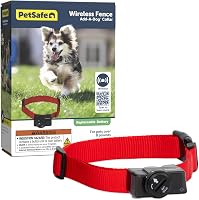
 Best for compact open yards
PetSafe Wireless Dog Fence, up to 1/2 acre
GPS vs wireless dog fence: how do the boundaries differ?
The main difference is custom shape versus a transmitter-centered circle. Dogtra supports custom or circular virtual boundaries, while these PetSafe models keep the same circular shape as you adjust their range.
A custom outline helps when usable space stretches behind a house or follows an uneven property line. It still needs generous space between the warning area and anything dangerous.
With transmitter-based wireless, placement controls which parts of the yard fall inside the circle. Increasing the range expands it in every direction, including toward places you may want to exclude.
| Product | Best for | Boundary | Yard size | Setup | Our score |
|---|---|---|---|---|---|
| Dogtra GPS Fence | irregular yards | Custom or circular virtual fence | Designed for 3/4 acre or larger | App setup, then collar works independently | 8.0 |
| PetSafe Wireless Dog Fence, up to 1/2 acre | compact open yards | Circular, up to 1/2 acre | Up to 1/2 acre | Indoor transmitter and receiver collar | 8.9 |
| PetSafe Stay & Play Compact wireless fence, up to 3/4 acre | wider open yards | Circular, up to 3/4 acre | Up to 3/4 acre | Indoor transmitter and receiver collar | 8.7 |
For a broader starting point, read how wireless and GPS dog fences work. The wireless fence guide covers more circular systems and their setup needs.
GPS vs wireless dog fences: why shape comes before acreage
Usable space matters more than total acreage. A large property can still have a poor containment layout if most open ground sits beside a road, beyond a driveway or under dense cover.
Sketch the house, property lines, road, parking area and intended play space. Draw a circle centered on a possible transmitter location, then ask whether enough safe ground remains inside it.
A bigger coverage figure won't fix a circle that crosses a neighbor's yard. Likewise, a custom outline won't make a narrow strip spacious enough for warning zones and a dog's response.
Which of these three fences fits your yard?
Dogtra suits larger properties needing a custom shape; the PetSafe models suit circular play areas. Treat their size limits as a first filter, then check the actual layout.
Dogtra is designed for properties of 3/4 acre or larger. Its warning zone, primary fence and 2 backup fences need room, so don't try to squeeze the system onto a smaller plot.
The standard PetSafe Wireless Dog Fence covers up to 1/2 acre, with an adjustable radius of 5–90 ft. It suits a compact open yard where the transmitter can sit near the center of the intended area.
Stay & Play extends the circular range to 3/4 acre, with a radius of 22–105 ft. Choose it when the smaller PetSafe circle leaves useful safe ground outside the boundary.
Skip both PetSafe options if your layout needs a long, narrow boundary or a shaped cutout. Skip Dogtra if the property lacks enough open outdoor space for its zones.
To understand what virtual containment can and cannot do, see whether GPS dog fences work.
How do trees, buildings and nearby roads affect the choice?
Open sky favors GPS, and safe setbacks matter with either approach. Don't place a boundary directly along a road, pond edge or other hazard.
Dogtra gives typical GPS accuracy as within 3–15 ft and recommends a wide, open area with a clear view of the sky. That is a reason to allow extra space, not a promise of a fixed boundary at every moment.
A custom line on a map can look precise while leaving too little room on the ground. Walk the planned route and look for tight corners, steep sections and narrow passages before deciding the shape works.
For transmitter-based wireless, check the whole circle with the receiver as directed in the manual. A range setting alone doesn't show where every warning point falls around buildings and changes in terrain.
Heavy tree cover deserves extra attention before you choose GPS. Read how GPS dog fences work in wooded areas if much of your play area sits beneath trees.
Which collar fits your dog and care routine?
Check both body weight and neck size before choosing a fence. Meeting the minimum weight does not mean every collar will fit every dog comfortably.
Dogtra suits dogs 15 lb and up, with necks measuring 10–30 inches. The standard PetSafe collar fits dogs 8 lb and up and necks of 6–28 inches.
Stay & Play fits dogs 5 lb and up, also with a 6–28-inch neck range. For a smaller dog, compare wireless dog fences for small dogs before choosing by coverage alone.
Battery care separates these options too. Dogtra has a rechargeable battery described as lasting all day, while Stay & Play also uses a rechargeable collar.
The standard PetSafe uses an RFA-67D-11 replacement battery that can last up to 2 months and has a low-battery indicator. It suits buyers who prefer keeping a spare battery to remembering regular charging.
Stay & Play's rechargeable battery is non-replaceable, which matters for long-term ownership. All 3 collars are waterproof, but you should still follow their cleaning, drying and charging instructions.
For several dogs, count collars as part of the setup. Dogtra supports up to 3 dogs sharing a fence profile, while both PetSafe systems support additional compatible receiver collars.
How should you set up GPS and wireless fences?
Confirm the boundary without your dog wearing the collar, then begin training. Equipment setup and teaching your dog the limits are separate jobs.
For PetSafe, choose a suitable indoor transmitter location near an outlet. Adjust the range, walk the perimeter with the receiver as the manual directs and mark the boundary with the included flags.
Keep the transmitter in that location once training begins. Moving it moves the center of the circle, so even a small relocation calls for another boundary check.
For Dogtra, use the app to create the fence, then check the route outdoors. The collar works independently after setup, without a phone connection, Wi-Fi or data.
Dogtra recommends keeping the app and collar firmware current. It includes a training guide, but its boundary flags are sold separately.
PetSafe describes equipment setup as taking 1–2 hours. Don't read that as a deadline for giving your dog free use of the yard.
Before each outdoor session, check the collar's charge or battery, fit and system status. After changing the boundary or equipment location, repeat the perimeter check before your dog uses it.
For more on transmitter placement, see how wireless dog fences work.
How do you teach the boundary without rushing?
Use the training guide, visible flags and short supervised sessions. A dog needs to learn where to turn back and what to do when a warning sounds.
Start on a leash and keep early sessions calm. Reward movement back into the safe area, and avoid pulling or encouraging your dog across an active boundary.
Follow the manual's sequence for warning modes and correction settings. Don't raise the setting simply because your dog hasn't yet learned what the signal means.
The standard PetSafe offers a tone-only mode and 5 adjustable correction levels. Dogtra offers tone, vibration or stimulation settings, with 100 adjustable levels.
If your dog freezes, panics or refuses to enter the yard, stop the session and seek help from a qualified trainer. More exposure to a confusing boundary is not useful training.
These systems suit households willing to teach and supervise. Skip electronic containment if you're expecting a collar to replace that work.
What happens if your dog crosses the boundary?
A return-friendly feature helps reentry, but it doesn't stop every escape. Plan how you'll calmly bring your dog back before you start using the fence.
Both PetSafe systems provide static-free reentry. Dogtra disables correction when it detects the dog returning and uses a return reminder tone.
Those features help avoid correcting a dog for coming home. They do not physically slow a dog chasing an animal or keep an unfamiliar dog from entering the yard.
Keep a leash available and supervise while your dog learns. If chasing, fear or repeated boundary crossings continue, use another containment method and get training help.
Do GPS fences need subscriptions or include tracking?
Dogtra has no subscription fees and does not include live tracking or notifications. Its app can show movement routes and distance in history after use.
That distinction matters if your real concern is finding a dog after an escape. A containment collar and a location tracker solve different problems, even when both use GPS.
Use our guide to choosing a dog GPS tracker if live location is a priority. Don't choose Dogtra expecting a missing-dog alert.
For other GPS systems, check their service requirements separately. Read whether GPS dog fences need a monthly plan before assuming every model works like Dogtra.
Which system is easier to use away from home?
PetSafe suits trips with indoor power; Dogtra suits suitable open properties where you can set up a new virtual fence. A familiar collar still needs a checked boundary and training at each destination.
Both PetSafe systems are portable for camping or vacation homes with an outlet. Confirm that you have an appropriate indoor transmitter location and permission to use the surrounding ground.
Dogtra stores up to 30 unique fences, which helps when you return to familiar properties. Check conditions again on arrival rather than relying only on a saved map.
Remove the Dogtra collar indoors because walls and ceilings can block GPS signals and confuse its position reading. Include collar removal in your routine when moving between the house and yard.
If travel means crowded campsites, narrow spaces or shared paths, a leash or physical enclosure is usually the more practical choice. Portable equipment doesn't make every destination suitable for electronic containment.
FAQ: GPS vs wireless dog fence
Choose by boundary shape first, then check fit, space and daily use. These answers address the remaining questions about the systems compared here.
Is a GPS dog fence better than a wireless fence?
A GPS fence is the better fit when a suitable property needs a custom outline; transmitter-based wireless suits a yard that fits a circle. Start with the shape of the safe play area, then check collar fit and daily care needs.
Neither system creates a physical barrier.
Does a wireless dog fence need Wi-Fi?
The PetSafe systems here use a plugged-in indoor transmitter to create the boundary, rather than a home Wi-Fi network. Dogtra also requires no Wi-Fi or data for its fence, although you use its app during setup.
A wireless fence's radio boundary and your internet connection are different things.
Can a GPS dog fence work in a small yard?
This Dogtra GPS Fence is designed for properties of 3/4 acre or larger, so skip it for a smaller yard. Dogtra says cramped layouts compress the warning and backup zones.
A small circular wireless area may fit instead, but only if it stays inside safe, usable space.
Does a GPS dog fence track your dog?
A GPS fence does not automatically include live tracking, and Dogtra's system has no live location feature or notifications. Its app shows route and distance history after use.
If finding a missing dog is your main goal, choose equipment built for location tracking rather than assuming containment includes it.
Can I take a wireless dog fence when I travel?
Yes, these PetSafe wireless systems are portable for suitable places with an outlet and an indoor transmitter location. Check permission to use the space, confirm that the circle avoids hazards and repeat boundary training at the destination.
Moving the equipment does not teach your dog the new limits.
GPS vs wireless dog fence: which should you choose?
Choose the system that leaves a safe, teachable play area inside your property. In the GPS vs wireless dog fence decision, reject an unsuitable layout before comparing convenience features.
Pick Dogtra when a custom outline solves a real layout problem and your property meets its space and sky-view needs. Skip it for a small yard or if live tracking is essential.
Pick the standard PetSafe for a smaller circular area and a replaceable-battery routine. Choose Stay & Play when you need a wider circle, a rechargeable collar or its lower minimum dog weight.
If neither shape leaves enough room away from hazards, choose a physical barrier or supervised leash use. Compare the best GPS dog fences for other virtual-boundary options, or the best wireless dog fences for more transmitter-based choices.
Frequently asked questions
Is a GPS dog fence better than a wireless fence?
A GPS fence is the better fit when a suitable property needs a custom outline; transmitter-based wireless suits a yard that fits a circle. Start with the shape of the safe play area, then check collar fit and daily care needs.
Neither system creates a physical barrier.
Does a wireless dog fence need Wi-Fi?
The PetSafe systems here use a plugged-in indoor transmitter to create the boundary, rather than a home Wi-Fi network. Dogtra also requires no Wi-Fi or data for its fence, although you use its app during setup.
A wireless fence's radio boundary and your internet connection are different things.
Can a GPS dog fence work in a small yard?
This Dogtra GPS Fence is designed for properties of 3/4 acre or larger, so skip it for a smaller yard. Dogtra says cramped layouts compress the warning and backup zones.
A small circular wireless area may fit instead, but only if it stays inside safe, usable space.
Does a GPS dog fence track your dog?
A GPS fence does not automatically include live tracking, and Dogtra's system has no live location feature or notifications. Its app shows route and distance history after use.
If finding a missing dog is your main goal, choose equipment built for location tracking rather than assuming containment includes it.
Can I take a wireless dog fence when I travel?
Yes, these PetSafe wireless systems are portable for suitable places with an outlet and an indoor transmitter location. Check permission to use the space, confirm that the circle avoids hazards and repeat boundary training at the destination.
Moving the equipment does not teach your dog the new limits.