How Do Wireless Dog Fences Work?
Here's how wireless dog fences work: a transmitter sends a signal to a receiver collar, which gives boundary cues. Training teaches your dog to turn back, but the system cannot physically prevent an escape.
On this page (8 sections)
- How do wireless dog fences work?
- Which parts do you need to buy?
- How do you know whether the circle fits your yard?
- How do you set up a wireless dog fence?
- Do walls and obstacles affect wireless fences?
- How do you train your dog and care for the collar?
- Which mistakes make a wireless fence a poor choice?
- How should you decide whether a wireless dog fence will work?
Wireless dog fences work by sending a signal from a transmitter to a receiver collar, which gives cues near a set boundary. Training teaches your dog to turn back toward the play area.
How well a system suits your home depends on the yard's shape, the collar's fit, and your dog's response to training. A wireless boundary cannot physically stop an escape or keep other animals out.
For a wider comparison of containment options, start with our complete guide to wireless and GPS dog fences.
How do wireless dog fences work?
A central transmitter defines a circular play area, and the collar responds as your dog approaches its edge. The PetSafe systems here use an indoor transmitter plugged into an outlet.
You adjust the range to make the circle larger or smaller. Moving the transmitter also moves the circle, so its position matters as much as the range setting.
Training flags give your dog a visible guide while learning the boundary. The collar's cues only become useful when your dog understands that turning back is the right response.
How do wireless dog fence collars work at the boundary?
Wireless dog fence collars give warning or correction cues near the boundary, according to the model and settings. Follow the manual for the cue sequence rather than assuming every collar behaves alike.
Both complete PetSafe systems here offer static-free reentry. If your dog crosses, it can return without receiving a static correction for coming back.
That feature helps with reentry, but it doesn't make the boundary escape-proof. A dog chasing wildlife or fleeing a loud noise may keep moving despite the collar's cues.
Which parts do you need to buy?
You need a complete transmitter-and-collar kit for a first installation. An extra receiver collar only adds another dog to an existing compatible system.
The kits here include training flags and a tool for checking collar operation. Keep those accessories available for setup and later boundary checks.
The standard PetSafe Wireless Dog Fence suits a yard that fits its circle and a dog weighing at least 8 lb, with a neck measuring 6–28 in. Its range adjusts from 5 to 90 feet in all directions.
Choose it if you prefer replacing a collar battery to managing a charging routine. The receiver uses a PetSafe RFA-67D-11 battery, with battery life of up to 2 months and a low-battery indicator.
Skip this kit for a dog below its minimum weight or a property that needs a narrow, custom-shaped boundary. Its tone-only mode and 5 static levels don't change those limits.
Can you add another dog without another transmitter?
Yes, each additional dog needs a compatible receiver collar, rather than a separate transmitter. Train each dog individually before letting them use the area together.
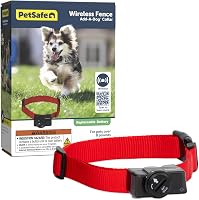
This receiver works with all PetSafe Wireless Fence transmitters, but not PetSafe in-ground fences or remote trainers. Buy it for an existing wireless setup; skip it if you're starting without a transmitter.
It fits dogs 8 lb and up with 6–28 in necks and includes short and long contact points. Its tone-only mode and 5 static levels let you choose settings for each dog.
The collar uses a replaceable battery with an expected life of 1–3 months, depending on use. Our guide to wireless fences for two dogs explains the extra planning a shared boundary needs.
How do you know whether the circle fits your yard?
Map the usable circle before comparing acreage. The safe play area must stay inside your property and clear of roads, driveways, pools, and other hazards.
Mark possible indoor transmitter locations on a rough yard sketch. Measure from each location toward the nearest hazard, since that direction can limit the range for the whole circle.
A long backyard may lose usable space because the circle also extends sideways. Maximum coverage won't help if widening the circle puts part of the boundary across a road.
If you need a different shape, compare GPS and wireless dog fences and explore our GPS dog fence guides.
When is Stay & Play the better choice?
Choose Stay & Play for a wider circle, a rechargeable receiver, or its lower minimum dog weight. It still needs a yard that suits a circular boundary.
Its range adjusts from 22 to 105 feet in all directions, and the LCD shows range and system warnings. The included collar fits dogs 5 lb and up with 6–28 in necks.
That makes it the relevant option here for a dog weighing 5–7 lb, provided the collar fits correctly. For a small dog, compare fit considerations in our small-dog wireless fence guide.
Skip Stay & Play if you need a custom outline or cannot keep up with charging. A rechargeable receiver is useful only when it's ready before outdoor time.
How do you set up a wireless dog fence?
Place the transmitter, check the boundary, then begin training. PetSafe describes setup for these kits as taking as little as 1–2 hours, but your dog's learning takes separate time.
- Choose an indoor location. Follow the clearance and placement instructions, with a suitable outlet nearby.
- Set a conservative range. Start inside your measured safe area rather than at maximum coverage.
- Check the full perimeter. Keep the collar off your dog and use the supplied checking tool as directed.
- Place the flags. Mark the actual boundary response, rather than an estimated line on your sketch.
- Fit the collar. Follow the contact-point and strap instructions before beginning supervised lessons.
Walk the whole edge, including corners near buildings and changes in ground level. If the response is inconsistent, adjust placement as instructed and repeat the check before involving your dog.
Both kits are portable where you have access to an outlet. At a vacation home or campsite, repeat the boundary checks and training steps needed for that location.
Do walls and obstacles affect wireless fences?
Radio signals can be affected by walls, metal, and nearby structures, so an indoor transmitter doesn't guarantee a suitable boundary in every yard. Check actual collar responses around the full perimeter.
Don't choose a location only because the transmitter is easy to hide there. Follow PetSafe's placement guidance, and pay attention to nearby metal objects or areas where the boundary behaves unevenly.
Stop using an inconsistent setup and contact PetSafe for guidance. Our wireless fence guides cover other options if your property doesn't suit this layout.
How do you train your dog and care for the collar?
Follow the system's training plan and keep the receiver ready for each outing. Installing the equipment doesn't mean your dog understands the boundary.
Use short, supervised sessions with the flags in place. Reward your dog for turning toward the play area, and progress only when the current step is clear.
Use a separate regular collar or harness for the leash, following the receiver's instructions. Pulling on a receiver collar can change its fit and contact pressure.
Check the neck and contact area regularly for rubbing or irritation. Follow the manual's wear-time limits, cleaning instructions, and fitting checks rather than leaving the receiver on continuously.
Before outdoor time, check power, battery status, fit, and collar operation as directed. A waterproof receiver still needs clean contact points and a secure strap.
Which mistakes make a wireless fence a poor choice?
The biggest mistakes are choosing by acreage alone and expecting the collar to replace training. Either can leave you with equipment that doesn't suit your yard or dog.
Other avoidable problems include:
- Buying only an extra collar. It needs a compatible transmitter to create a working system.
- Moving the transmitter after training. This shifts the boundary your dog has learned.
- Increasing correction to rush learning. Follow the training steps instead.
- Ignoring battery warnings. Schedule charging or keep the correct replacement battery available.
- Treating reentry as a recovery plan. Your dog may not return after crossing.
A wireless fence also leaves the yard open to people and animals entering. Choose a physical barrier if preventing entry or physically blocking escape is essential.
How should you decide whether a wireless dog fence will work?
Choose by safe boundary fit first, then collar fit and power routine. Understanding how wireless dog fences work helps you judge whether their limits match your property.
Pick the standard PetSafe kit for a suitable circle and a dog that meets its size requirements. Choose Stay & Play for its wider range, rechargeable receiver, or lower weight threshold.
Buy the extra receiver only to expand or repair a compatible setup. If the circle cannot stay clear of hazards, choose another containment approach rather than stretching the range.
Once the yard and dog requirements are clear, use our best wireless dog fence comparison to narrow your options.
Frequently asked questions
How does a wireless dog fence create a boundary?
A circular wireless dog fence uses a transmitter signal and a receiver collar to mark the edge of a play area; the collar gives cues near that edge, and training teaches your dog to turn back. It creates no physical barrier, so a dog can still cross.
Do wireless dog fences work through walls?
These systems use an indoor transmitter to serve an outdoor play area, but placement still matters; walls, metal, and other obstacles can affect radio signals. Follow the placement instructions and check the whole boundary before use; if cues are inconsistent, keep your dog on a leash while resolving the problem.
Can a wireless dog fence cover a large or irregular yard?
A circular wireless fence suits a yard where a circle fits safely inside the usable space; a larger range creates a larger circle, not a custom outline. Long, narrow lots and yards with pools or roads close by may need a different boundary type or a physical fence.
Does a wireless dog fence replace training?
No, a wireless dog fence depends on training to help your dog understand its cues; follow the system's steps, use boundary flags, and reward your dog for returning to the play area. Keep sessions supervised, and don't increase correction simply because your dog hasn't learned the boundary yet.