8 Best GPS Dog Collars (November 2026)
The best GPS dog collars include the Halo Collar 5 GPS dog fence for virtual yard boundaries, the Tractive Dog GPS Tracker for frequent location checks, and the Fi Series 3+ GPS collar (blue) for busy charging schedules.
On this page (8 sections)
- How we chose these GPS dog collars
- Compare the best GPS dog collars
- GPS dog collars for containment and tracking
- What should you check before buying a GPS dog collar?
- How should you set up a GPS dog collar?
- How do you care for the collar and use its alerts?
- Which GPS dog collar mistakes should you avoid?
- Which best GPS dog collar choice fits your routine?
The best GPS dog collar for boundary feedback and tracking is Halo Collar 5. Choose Tractive Dog GPS Tracker for frequent live location checks, or Fi Series 3+ if fewer charging breaks matter more.
Your first decision is whether you want warnings for your dog or location alerts for you. Our guide to GPS dog trackers explains tracking choices, while GPS dog fences covers systems with boundary feedback.
Fit and local coverage come before extra app features. A device that suits your dog's body and your daily routine is more useful than one you leave charging at home.
Our picks at a glance
-
1

-
2

-
3

- 4
 Best for large dog householdsCheck it
- 5
 Best for shared care dutiesCheck it
- 6
 Check it
Tractive GPS tracker with 6-month subscription
Best for bundled service starters - 7
 Check it
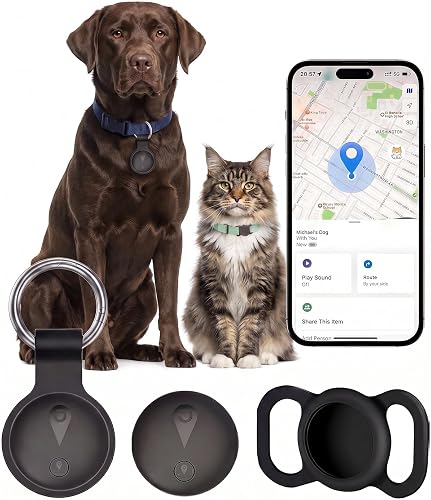
Ztobny dog tracker with holder
Best for fee-conscious phone users - 8
 Best for reviewing recent routesCheck it
How we chose these GPS dog collars
We compared tracking tools, boundary feedback, fit, battery needs and service terms. Halo leads this roundup because it combines fence functions with location tracking; readers who need only a tracker should start with Tractive or Fi.
We kept different Tractive versions separate because their size guidance, battery claims and included service differ. Choosing by brand name alone could leave you with the wrong version.
We also separated clear cellular tracking options from tags whose remote tracking methods need confirmation. A promise of no monthly fee deserves less weight than a clear explanation of where location updates come from.
Compare the best GPS dog collars
Choose by job first, then fit and charging needs. Halo is the fence-and-tracking choice, while the other devices focus on location, alerts, shared care or route history.
| Product | Best for | Main use | Feedback | Plan | Our score |
|---|---|---|---|---|---|
| Halo Collar 5 GPS dog fence | virtual yard boundaries | GPS fence and tracking | Sound, vibration, optional static | Membership required | 8.2 |
| Tractive Dog GPS Tracker | frequent location checks | GPS tracking and escape alerts | 8.0 | ||
| Fi Series 3+ GPS collar (blue) | busy charging schedules | GPS tracking and escape alerts | 7.9 | ||
| Tractive XL GPS tracker | large dog households | GPS tracking and alerts | 7.6 | ||
| Life360 Pet GPS Tracker | shared care duties | Live tracking and escape alerts | Subscription required | 7.2 | |
| Tractive GPS tracker with 6-month subscription | bundled service starters | GPS tracking and virtual fences | 6.8 | ||
| Ztobny dog tracker with holder | fee-conscious phone users | App-based pet location tracking | No monthly fee, according to Ztobny | 6.7 | |
| galawelly GPS dog tracker | reviewing recent routes | App-based pet location tracking | No monthly fee, according to galawelly | 6.6 |
GPS dog collars for containment and tracking
Choose Halo for boundary feedback, Tractive for frequent location checks, or Fi for a longer claimed charge interval. The remaining picks serve more specific needs, including large dogs, shared care and bundled service.
Halo Collar 5 GPS dog fence: Best for virtual yard boundaries
- GPS tracking and stored virtual fences
- Sound, vibration and optional static feedback
- Training guidance included
Choose Halo when you want your dog to receive boundary warnings as well as location tracking. Allow time for training and a nightly charging routine.
Pros
- Fence creation and tracking in one system
- Multiple fences can be stored
- Training guidance is included
Cons
- Membership required to activate GPS and fence features
- Charging nightly is recommended
Halo Collar 5 suits households that want to teach yard boundaries while keeping location tracking in the same system. It gives sound and vibration warnings, with static feedback optional, and includes training guidance.
Halo says its Precision+ system combines dual-frequency L1 and L5 satellites with ground-station corrections. You can create and store multiple fences, which helps if your dog regularly visits more than one property.
A membership is required for GPS and fence features, and Halo recommends nightly charging. Make sure someone can handle that routine and supervise the early boundary lessons before choosing it.
Skip Halo if you only need escape alerts or cannot set aside time for fence training. Extra fence tools add little value when your main goal is finding a dog after an open-gate escape.
For a closer look at boundary systems, read how GPS dog fences work and compare them with wireless dog fences.
Tractive Dog GPS Tracker: Best for frequent location checks
- Live location updates every 2–3 seconds
- Virtual fences and location history
- Heart rate and respiratory rate monitoring
Tractive suits dogs over 8 lb whose households want frequent live updates and location history. Its virtual fences notify you of an escape rather than give the dog boundary feedback.
Pros
- Frequent live location updates
- Virtual fences and location history
- Waterproof design
Cons
- For dogs over 8 lb
- Escape alerts do not provide containment
Tractive Dog GPS Tracker is the clearest fit here for people who want to follow a dog's changing location. Tractive claims live updates every 2–3 seconds, with location history to help retrace a route.
The waterproof attachment is intended for dogs over 8 lb, and Tractive claims up to 14 days of battery life. Check how it sits on your dog's current collar, especially if there are already tags or other attachments.
Heart rate, respiratory rate and barking features add context to daily activity. Use them to notice changes, rather than draw a health conclusion from one alert.
Its virtual fences notify you when your dog leaves an area; they do not give the dog boundary feedback. Skip it if you need a fence-training system rather than a tracker.
Choose this version for frequent location checks without moving to the larger-dog model. Read our Tractive subscription guide and Tractive vs Fi comparison before choosing a plan and device together.
Fi Series 3+ GPS collar (blue): Best for busy charging schedules
- Up to 3 months per charge
- GPS and LTE-M tracking with Lost Mode
- Shared household app access
Fi suits households that want tracking with fewer charging breaks and shared app access. This blue version is large, so match its size to your dog's neck.
Pros
- Long claimed charge interval
- Safe Zones and Escape Alerts
- Household app access
Cons
- Membership required
- This version is large
Fi Series 3+ fits households that want location tracking without a daily charging task. Fi claims up to 3 months per charge, with settings, signal and activity affecting that interval.
It uses GPS and LTE-M, and Lost Mode switches to rapid live updates. Safe Zones and Escape Alerts help you notice departures, while shared household access lets more than one person check the app.
The app also tracks activity and sleep and detects behaviors including barking, licking and scratching. These tools suit a household that wants daily patterns alongside escape monitoring.
This specific blue version is large, so measure your dog's neck rather than choosing from body weight alone. Fi Membership is required, and charging uses the included Fi Base.
Skip this version if the large collar does not fit or you need boundary warnings directed at your dog. Our Fi collar subscription guide explains the plan question, while the Fi vs Halo comparison separates tracking from fence needs.
Tractive XL GPS tracker: Best for large dog households
- For dogs over 44 lb
- Up to 6 weeks battery life
- Live updates every 2–3 seconds
Choose Tractive XL for a dog over 44 lb when you want frequent live updates with a longer claimed charge interval than the standard Tractive pick.
Pros
- Clear weight guidance for larger dogs
- Longer claimed battery interval
- Live tracking and location history
Cons
- Subscription required
- Intended only for dogs over 44 lb
Tractive XL is the stronger Tractive choice for a dog over 44 lb when fewer charging breaks matter. Tractive claims up to 6 weeks of battery life, compared with the shorter maximum for its standard tracker here.
It retains live location updates every 2–3 seconds, along with virtual fences and location history. Heart rate, respiratory rate and bark monitoring also make it useful for following changes in daily patterns.
Its required subscription covers the built-in SIM and data. Include ongoing service in your decision rather than comparing the device alone.
Choose XL when your dog meets the weight guidance and you want location tracking with a longer claimed battery interval. Skip it for a smaller dog, even if the battery figure looks appealing.
For a large dog that wears several collar accessories, also check the available space. The tracker needs a secure position that does not crowd the buckle or interfere with normal collar use.
Life360 Pet GPS Tracker: Best for shared care duties
- GPS, LTE and Bluetooth tracking
- Shared routines and care reminders
- Reserve Mode for extended findability
Life360 combines pet location with shared feeding, walking and medication reminders. New and free members receive 12 months of Silver service, which then auto-renews.
Pros
- Included service for eligible members
- Shared routines and care reminders
- Reserve Mode extends findability
Cons
- Cellular coverage required
- Included subscription auto-renews after 12 months
Life360 Pet GPS Tracker suits a household where several people share walks, meals and other care duties. It combines GPS, LTE and Bluetooth tracking with escape alerts, activity reports and shared reminders.
New and free members receive 12 months of Silver service, followed by auto-renewal. Device use requires a subscription and cellular coverage, so confirm eligibility and renewal terms before activation.
Life360 claims up to 14 days of battery life. Its separate Reserve Mode can extend findability for up to 6 months after primary battery depletion, but that should not become your normal charging plan.
Choose it when care coordination is part of the problem you want to solve. Feeding and medication reminders can be more useful to a busy household than another route chart.
Skip it if shared care adds little value and your priority is a fence or a longer regular charge interval. Assign one person to monitor the battery so shared access does not turn into shared assumptions.
Tractive GPS tracker with 6-month subscription: Best for bundled service starters
- Six months of Premium service included
- Virtual fences and location history
- Power Saving Zones
This bundle covers the first six months of Premium service and includes live tracking and escape alerts. Compare its battery interval with the other Tractive versions before choosing.
Pros
- Initial service period included
- No additional activation fee
- Waterproof design
Cons
- Shorter claimed battery interval than other Tractive picks here
- Included service ends after six months
This Tractive bundle suits buyers who want the initial service period included with the tracker. It covers six months of Premium service, including the integrated SIM and data, without an additional activation fee.
You get live location updates every 2–3 seconds, virtual fences and location history. It also supports activity and sleep monitoring through the Tractive app.
Tractive claims up to 10 days of battery life, with extended life using Power Saving Zones. The waterproof design suits daily outdoor use, but the charging interval differs from the other Tractive versions in this roundup.
Choose the bundle if its included service and charging needs fit your routine. Set a reminder before that service period ends so you have time to review continued access.
Skip it if you mainly want the longest charge interval among the Tractive choices here. For the service decision, read what Tractive plans cost rather than assuming the included period covers the device's full working life.
Ztobny dog tracker with holder: Best for fee-conscious phone users
- No monthly fee, according to Ztobny
- iOS 14.5 and higher or Android compatibility
- Silicone holder included
Consider Ztobny only after confirming which app and tracking network work with your phone. Its references to both Find My and a downloadable app need clarification before you rely on remote updates.
Pros
- No recurring fee advertised
- Holder included
- iOS and Android support advertised
Cons
- Exact app requirements need confirmation
- Remote tracking network and coverage need checking
Ztobny is a conditional choice for buyers who want to avoid recurring fees and are willing to confirm the tracking method first. It advertises iOS 14.5 and higher or Android compatibility and includes a silicone holder.
The key buying question is which app and network your phone will use. Ztobny refers to both Find My and a downloadable app, so get a clear answer for your exact phone before relying on remote location updates.
Ask what happens when your dog leaves your phone's nearby connection range. You need to know what relays the location, where that relay works and how you can see the time of the last update.
Choose it only when those answers match your intended use. A household seeking an extra location aid has different needs from one preparing for a dog running beyond the neighborhood.
Skip it if dependable remote escape tracking is your main requirement and the network remains unclear. The absence of a monthly fee cannot resolve that gap.
galawelly GPS dog tracker: Best for reviewing recent routes
- DEONETAG app for Android and iPhone
- Up to 7 days of route playback
- No monthly fee or SIM, according to galawelly
galawelly offers route playback through DEONETAG and includes a dedicated holder. Confirm how remote updates reach your phone before choosing it for escape recovery.
Pros
- No recurring subscription advertised
- Recent route playback
- Dedicated holder included
Cons
- DEONETAG app required
- Remote tracking network and coverage need checking
galawelly suits buyers interested in reviewing recent routes through the DEONETAG app, provided its remote tracking method meets their needs. It supports Android and iPhone and includes a dedicated holder.
galawelly advertises no SIM card or recurring subscription for core tracking, plus up to 7 days of route playback. Those features make it worth considering for route review, but they do not answer how updates travel from a distant dog to your phone.
Before choosing it, confirm what network or nearby devices carry those updates. Also check whether the app clearly shows when a location was recorded, so an older point is not mistaken for the dog's current position.
The app supports sharing through an owner-generated QR code. Share location access only with people who need it, and review the app's access controls.
Skip it for primary escape recovery if the remote connection remains unclear. Choose it for route history only after the connection requirements fit the places your dog visits.
What should you check before buying a GPS dog collar?
Check purpose, fit, coverage, charging and service before comparing extra features. A heart-rate chart or shared reminder cannot make up for a poor collar fit or missing location updates where you walk.
Which is the best GPS dog collar for your goal?
Choose a fence collar for boundary feedback or a tracker for location updates and escape alerts. Start with the event you want help with: approaching a yard edge, leaving through a gate or getting separated on a walk.
For a fence, compare the Halo Collar with PetSafe Guardian. If you mainly want to locate a dog after it wanders, compare tracking tools and read about GPS trackers without cell service.
Does the collar fit without crowding your dog's neck?
Measure neck size and check the exact model's fit guidance. For attachments, check both the collar width and the space left around buckles, leash hardware and identification tags.
Watch how the device sits when your dog lowers its head, rests or turns. A tracker should not force you to leave the collar too loose or tighten it beyond the collar's fit instructions.
If you're comparing a fence system for a smaller dog, read whether Halo works for small dogs. Do not assume all devices in one brand's range share the same fit.
Will updates reach you where your dog goes?
Check the places that matter most: home, regular walking routes, a sitter's house and travel stops. GPS determines position, while a separate connection may be needed to send that position to your phone.
A coverage map is a starting point, followed by supervised checks in those locations. Compare the time shown on each location update rather than judging the connection from a map pin alone.
Trees and buildings can also affect satellite reception. If your yard has dense cover, read how GPS dog fences work in wooded areas before placing boundaries close to hazards.
Can your routine support charging and service?
Choose a charging routine you can keep during an ordinary week. Use the comparison table's maximum battery figures to narrow the field, then plan your schedule around the battery use you actually see.
Place the charger somewhere you will notice it and charge before long outings. A longer maximum interval is useful only if you still check the remaining charge.
Review service eligibility, renewal dates, cancellation terms and the features that remain available after service ends. Included months cover a period of access, while a no-fee device still needs a clear tracking method.
How should you set up a GPS dog collar?
Set it up before the first outing, with the dog securely supervised throughout. Account setup, phone permissions and a charged device should be ready before you need an escape alert.
- Charge and fit the device. Follow its instructions for charging, collar fit and attachment, then check that the holder or collar closure is secure.
- Finish activation. Add the correct pet profile, activate any required plan and confirm that your phone can receive notifications.
- Confirm location updates. Walk a familiar route with your dog on a leash and compare the app position with where you are.
- Check safe-zone alerts. Cross a boundary together in a safe place, following the device's instructions, and confirm which household phones receive the alert.
- Practice the response. Make sure another caregiver can open the app, identify the latest location and reach you.
Keep map boundaries away from roads, water and other hazards where possible. Leave room for positioning changes and alert delays rather than drawing a line at the last safe inch.
Fence collars need a separate training process. Follow the training guidance and use secure supervision while your dog learns what boundary cues mean; an app setup screen cannot teach that lesson.
For a broader explanation of boundary choices, use our complete guide to wireless and GPS dog fences. It helps connect the app settings with the type of yard system you need.
How do you care for the collar and use its alerts?
Keep the device secure, charged and readable in the app. Check the attachment after rough play, inspect the collar for wear and remove dirt according to the care instructions.
After wet outings, follow the manufacturer's drying and charging directions. A water-resistance claim does not replace care around charging contacts, holders and worn seals.
Review notification permissions after phone changes or app reinstalls. A working tracker offers little help if the household member responsible for the dog has alerts muted.
If an escape alert arrives, secure other pets and open the current location view. Check the timestamp, activate the available live or lost-pet mode, and coordinate with another person if possible.
Keep identification tags and microchip contact details current as well. They give someone who finds your dog a direct way to contact you without needing access to your tracking app.
Which GPS dog collar mistakes should you avoid?
Avoid treating alerts, battery claims or health charts as guarantees. Each is useful within a clear role, and each needs a practical response from you.
- Confusing an alert with containment. A notification tells you to act; it does not close a gate or stop a dog chasing wildlife.
- Choosing the longest battery figure first. Fit and coverage should decide which devices remain on your shortlist.
- Assuming unlimited range means universal coverage. Distance from your phone and availability of a connection are separate questions.
- Ignoring the location timestamp. A recent route point can help a search, but an older point needs to be recognized as history.
- Buying a familiar brand's wrong version. Check the exact size, battery interval and included service rather than relying on the brand name.
- Reacting to one health alert alone. Look for changes in your dog's behavior and seek veterinary advice for concerns; app measurements do not diagnose illness.
Keep physical safeguards where an escape would put your dog in immediate danger. That includes using a leash near roads and checking gates even when a tracker is active.
Which best GPS dog collar choice fits your routine?
Choose the best GPS dog collar for the job you will use every day. Make the final decision from your dog's fit, the connection where you go and the care routine your household can maintain.
Pick Halo Collar 5 if you want boundary feedback and will commit to training and nightly charging. Pick Tractive Dog GPS Tracker if frequent live location checks are the main goal, or Tractive XL when your larger dog meets its size guidance.
Choose Fi Series 3+ when the large collar fits and fewer charging breaks matter most. Choose Life360 when shared care duties are as useful to your household as location alerts.
The Tractive service bundle fits buyers who want an included initial plan period. Consider Ztobny or galawelly only after their remote tracking methods are clear enough for your intended use.
If you're still deciding between boundary systems, start with our GPS vs wireless dog fence guide. For tracking-focused choices, the dog GPS tracker buying guide narrows the decision by size, battery and plan.
Our top 3 picks at a glance
-
1
-
2
-
3
Frequently asked questions
What is the difference between a GPS dog collar and a GPS tracker?
A GPS dog collar can combine location tracking with warnings directed at your dog, while a tracker mainly reports location to you. Some trackers also send safe-zone alerts, but those alerts do not guide a dog back.
Choose boundary feedback for a training-based fence system or tracking for help locating a dog.
Do GPS dog collars need a subscription?
Some do: Halo and Fi require memberships, Tractive XL requires a plan, and Life360 requires a subscription with an included period for eligible members. The Tractive bundle includes initial service.
Ztobny and galawelly advertise no monthly fee; compare tracking methods in our guide to GPS dog tracker subscriptions.
Can a GPS dog collar keep a dog inside a yard?
A GPS fence collar can support boundary training, but it cannot guarantee containment. Halo gives sound, vibration and optional static feedback, while tracking-focused devices mainly notify you of an escape.
Keep physical safeguards where escape would be dangerous, and read how GPS dog fences work before choosing a system.
Will a GPS dog tracker work without cell service?
Remote tracking depends on how the device sends its location to your phone. Life360 requires cellular coverage, Fi uses LTE-M, and Tractive XL uses cellular connectivity.
A no-SIM tag still needs a way to relay updates; read our guide to GPS trackers without cell service before relying on one.
How do I choose the right GPS collar for my dog?
Choose by purpose first, then check fit, coverage, battery needs and service terms. A dog that needs boundary training has different needs from one whose household mainly wants escape alerts.
Measure the collar fit and use our dog GPS tracker buying guide to compare tracking-focused choices.